
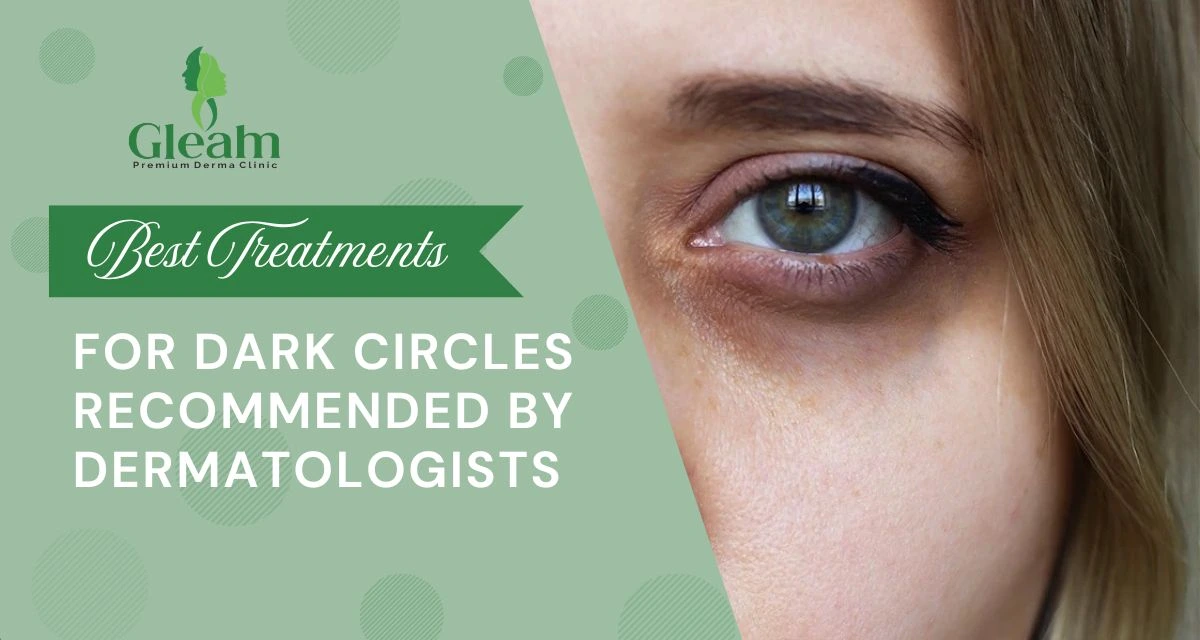
Best Treatments for Dark Circles Recommended by Dermatologists
Tired even when you had enough sleep? We know your secret! The skin concerns dermatologists most frequently face with their patients are dark circles. Thankfully, many safe and effective treatment options that can genuinely address your dark circles actually work.
With all the treatments available in modern skin care and dermatology, treatments for dark circles have improved. These include safe treatments that focus on reducing dark spots, minimizing puffiness, and treating thinner, hollowing skin. If you’re looking for the best treatment for dark circles for your skin concerns, it’s vital to understand the root cause.
In this blog post, we cover both of them and the treatments dermatologists would recommend to you.
Why Do Dark Circles Appear?
Before we talk about what you can do about them, it’s good to get a handle on the causes. Your dark circles are most likely caused by one or more of the following:
- Genetics – Some people are just born with the thinnest skin under the eyes and/or more pigment in that area.
- Lack of sleep – Lack of sleep can also dilate the vessels in the skin beneath your eyes, making the dark color look more purple.
- Aging – With age, our skin loses collagen and thins, so we are able to see the blood vessels more clearly.
- Allergies – Constantly rubbing or friction can cause further damage and worsen hyperpigmentation.
- Lifestyle factors – Stress, screen time, water, and diet are some things that affect how the body processes things.
The correct type of dermatology treatment for dark circles really varies depending on the type you have.
1. Topical Treatments – The First Line of Defense
If you have light to medium dark circles, prescription creams and serums are effective in helping them appear to diminish.
What to look for in an eye cream:
- Vitamin C – Evens out skin tone, increases collagen production.
- Retinoids – Thicken skin over time, and with continued use, it causes blood vessels to not appear as prominently.
- Hyaluronic Acid – Moisturizes and plumps up the area under your eyes.
- Caffeine – Causes constriction of the blood vessels and therefore lessens puffiness.
- Kojic acid or Niacinamide – best for hyperpigmentation-related dark circles.
Hot tip – Topical treatments are not quick fixes. You need at least 4 to 8 weeks before you see an actual change in your under-eye circles.
2. Chemical Peels – For Pigmentation Issues
The usual treatment for dark circles if creams do not work for the area. This can be easily lightened with a light chemical peel by a dermatologist.
The type of peels commonly used for under-eye pigmentation includes: lactic acid, glycolic acid, or TCA peel. These peels do not damage skin as many harsh social media peel images suggest; a professional knows what they are doing!
This is a common treatment for dark circles in the area if creams have failed to help.
3. Dermal Fillers – The Game Changer
If dark circles are due to hollowness and volume loss (most typical with aging), dermal fillers are among the best treatment for dark circles available today.
Hyaluronic acid fillers are injected into the tear trough, the concavity running from the inside corner of your eye toward your cheek. As the lost volume is plumped up with the filler, the dark circle shadow is lessened.
What to expect:
- The results are seen instantly.
- The treatment procedure lasts about 15-20 mins.
- The effects of the treatment are lasting and are dependent upon the filler type.
- Swelling is slight and only lasts for one to two days.
4. Laser Treatments – For Stubborn Cases
When pigmentation or blood vessels are deeply set, lasers can target them directly.
- Q-Switched Nd: YAG Laser-Melanin particles are broken down by this laser to clear away pigmented dark circles.
- Fractional Laser: Increases collagen and the thickness of the thin under-eye skin.
- Intense Pulsed Light (IPL): Targets and improves the red/purple hue of blood vessels.
Treatment often needs to be carried out 3-5 times, with two weeks in between treatments. A course of treatment would result in quite long-lasting effects when accompanied by proper skin care.
5. PRP (Platelet-Rich Plasma) – Using Your Own Blood to Heal
The treatment consists of taking a small sample of your blood and then spinning it in a centrifuge machine, extracting all the platelets that aid healing, and injecting them under your eyes.
This stimulates your body’s own collagen production over time and effectively thickens the skin under your eyes. A great treatment for dark circles from a dermatologist using your own biology.
Results are visible after 2-3 months and can last for a year or more. Usually, 3 treatments are required a month apart for the full effect. The good thing? As the blood is your own, allergic reactions are almost nil.
6. Microneedling – Boosting Collagen Naturally
iny sterile needles are used to induce the skin to produce and heal itself. Not as bad as you might think.
These small “channels” stimulate skin to produce collagen and elastin. When added to serums (such as Vitamin C, hyaluronic acid, growth factors) on the under eyes, the small holes enhance absorption of actives.
The best treatment for: thin, crepey, early signs of aging under eyes.
7. Surgical Options – When Nothing Else Works
If the hollowing is very marked, or there is a considerable surplus of fat pads (yes, those bags under the eyes), then it would be necessary to undergo surgery, a blepharoplasty, which is a small operation in which redundant fat and skin are either removed or re-draped.
This option is generally best suited to an older age group, or where there is a massive oversupply of fat under the eyes, which non-surgical methods just cannot treat. You should consult with your dermatologist or a cosmetic surgeon to determine if this is the right path for you.
Quick Guide: Which Treatment Is Right for You?
Dark Circle Type | Best Treatment Option |
Brown pigmentation | Chemical peels, laser, topical brighteners |
Blue/purple discoloration | Fillers, PRP, caffeine-based creams |
Hollow/tear trough | Dermal fillers, PRP, fat transfer |
Thin translucent skin | Microneedling, PRP, retinoids |
Puffiness + darkness | Laser, lifestyle changes, allergy management |
Home Habits That Support Your Treatment
Regardless of which professional treatment you have, these simple habits will get you better, faster, and long-term results.
- Get seven or eight hours of sleep each night; do the same thing every day (including weekdays and weekends).
- Drink a day’s supply of an eight ounce glass of water per twenty pounds of your body weight.
- Protect your under eyes with a sunscreen everyday of the year; the sun damage under the eyes is the hardest to repair. This is the best under eye dark circles treatment you can give to yourself naturally.
- Wear sunscreen 365 days a year. The under-eye area is highly susceptible to sun damage.
- Cut back on salt. “Too much sodium draws water out of the tissues of the face, particularly the delicate under-eye area, making the circles and puffiness even more prominent,” claims one authority.
- Sleep with your head elevated. Use one extra pillow.
- Take off makeup gently. Do not rub eyes with force.
- Get off the screen at least one hour before sleep.
Why See a Dermatologist?
So let’s talk honestly – the creams you find over the counter, the “life hacks” you find on the internet… None of them work to get rid of dark circles. The skin under your eyes is the thinnest skin on your body – this requires specific and professional attention.
A dermatologist treatment for dark circles
- Correctly diagnose what the dark circles are
- Prescribe the correct course of treatment – it is not a one-size-fits-all method
- Perform treatment procedures safely and professionally around the most sensitive area on your face
- Combination treatments may be required for the best results.
It is not the most expensive method of treatment which will give the best results. It is the correct treatment for you, your type of skin, your complaint and your concern.
Final Thoughts
Who doesn’t get annoyed with dark circles? And although there’s nothing abnormal in them, and all of us have them, in some shape or form. There’s really no need to live with dark circles, especially if they bother you.
Thanks to advancements in dermatological treatments today, there is a wide array of solutions you can try. Whether it’s simply a cream or a chemical peel, fillers, or laser treatments, there’s something for you.
At Gleam Derma Clinic, we listen and understand, then make the right diagnosis before coming up with your uniquely personal treatment plan. This is because everyone’s skin type is unique, hence their skin treatment should be too.
Are you ready to leave behind dark circles for good? Schedule a consultation with our dermatologists today so that they can work with you to find the ideal approach for you.
Also read: Causes of Hyperpigmentation And How to Treat Dark Spots